



The holidays are a time to share gifts with friends and loved ones. They’re also one of the busiest times of year for package deliveries, giving scammers more opportunities to pose as retailers and delivery companies.
As holiday shopping ramps up, it’s important to be wary of scammers posing as delivery companies and attempting to access your banking info.
Package Tracking Scams
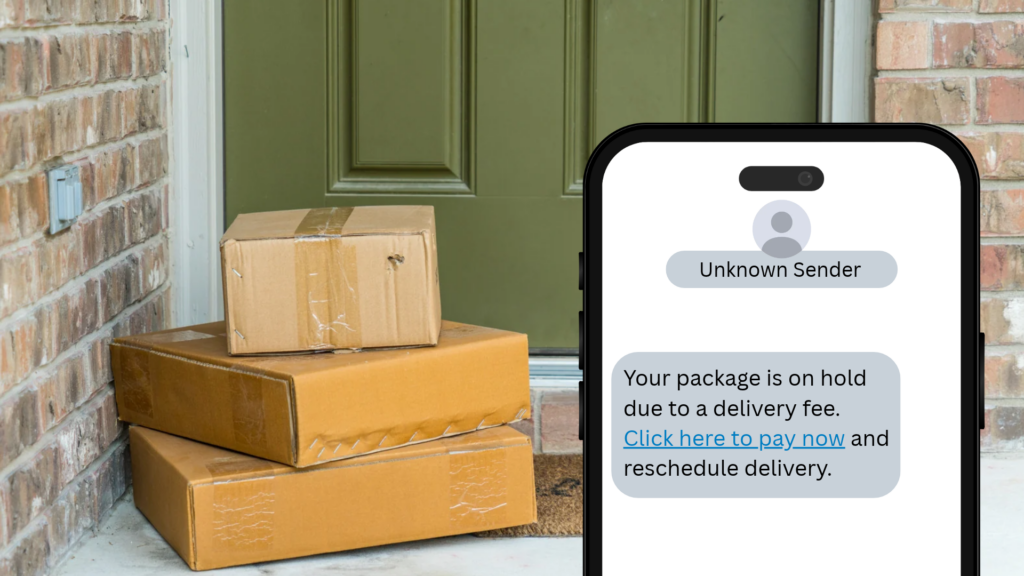
Package tracking scams use fake delivery notices that appear to come from well-known retailers such as Amazon, or carriers such as USPS, UPS, and FedEx. They typically arrive by text message or email and include a link to “track” or “reschedule” a delivery.
These scams are especially common during the holiday shopping season, when people are expecting packages and are more likely to trust the message.
How the Scam Typically Works
Scammers impersonate a trusted retailer or carrier to persuade you to click a link, share personal information, or make a payment. The initial message or email may claim there’s a missed delivery, a problem with your address, or a package awaiting confirmation.
To create a false sense of urgency, scammers may say “your package will be returned” or “action required within 24 hours.”
The link leads to a lookalike retailer website that may ask you to:
- Sign in with your account credentials
- Provide card details
- Enter a one-time passcode
- Or pay a small “redelivery fee”
Once stolen, this information may be used to take over your account, make unauthorized card transactions, or support additional scams, including impersonation calls.
Why This Matters
- Shoppers often have several legitimate orders in transit in November and December, so a fake email or text can look routine.
- These scams often lead to other fraud, such as compromised account credentials, stolen card data, and social engineering.
- Messages that look like they come from a trusted brand are hard for members to spot.
Tips to Avoid Package Tracking Scams
- Don’t click links in unexpected texts or emails about packages.
- Check order status directly through the retailer’s official app or website.
- Be wary of urgent language, unfamiliar phone numbers, and suspicious email addresses.
- Never share a one-time passcode with anyone, including someone claiming to represent Coast Central.
- If you clicked a suspicious link or entered information, contact us immediately so we can secure your accounts and cards.
The holidays should be a time for joy and togetherness, not an opportunity for scammers. Staying cautious and checking for deliveries through official apps and websites can help protect you and your finances.